

Personalised Notecards and How to Use Them
Personalised notecards are one of those small luxuries that quietly change how you communicate. They make everyday messages feel considered, without needing a special occasion. And because they’re practical (not size-dependent, easy to post, easy to store), they’re also one of the most gift-able stationery items you can keep on hand.
If you’ve ever bought a set of personalised notecards and then hesitated to use them because they felt “too nice”, this post is for you. The best way to enjoy personalised stationery is to use it often, in small moments, and let it become part of your routine.
Below are genuinely useful, real-life ways to use personalised notecards-at home, at work, for gifting, and for those little life admin moments that are nicer when they look pretty.
Personalised notecards are also a brilliant choice if you like to keep things sustainable. A good set gets used up (rather than sitting in a drawer), it’s easy to send without extra packaging, and it helps you avoid last-minute plastic-wrapped cards you don’t really love. If you choose notecards printed in small batches in the UK, on quality paper, they can feel like a thoughtful upgrade without creating waste.
The everyday note you’ll actually send
The simplest (and most underrated) use is the quick “just because” note. A personalised notecard turns a short message into something that feels like a real gesture. It can be as simple as: “Saw this and thought of you,” or “Hope this week is being kind to you.” These are the notes people keep on their fridge, or tuck into a book, or find again months later.
If you’re not sure what to write, keep a few easy lines ready: a compliment you genuinely mean, a shared memory, or one specific thing you appreciate about them. Personalised stationery does the “special” part for you-you just need to be sincere.
Thank you notes that don’t feel like a chore
Thank you notes are one of the best reasons to own personalised notecards. They’re perfect for the moments that don’t quite warrant a full greetings card, but still deserve acknowledgement: a neighbour taking in a parcel, a friend hosting dinner, a teacher helping your child, someone checking in when you’ve had a hard week.
A helpful trick: write the notecard as soon as the moment happens, not weeks later. Keep a small stack somewhere visible (desk drawer, kitchen shelf) with a pen you like. When it’s easy, you’ll do it more often.

The “gift tag” upgrade (without buying gift tags)
Personalised notecards are an easy way to make any gift look more premium, even if the gift itself is small. Instead of a flimsy gift tag, write the message on a notecard and tuck it under the ribbon, or slide it into the wrapping fold. It instantly looks intentional.
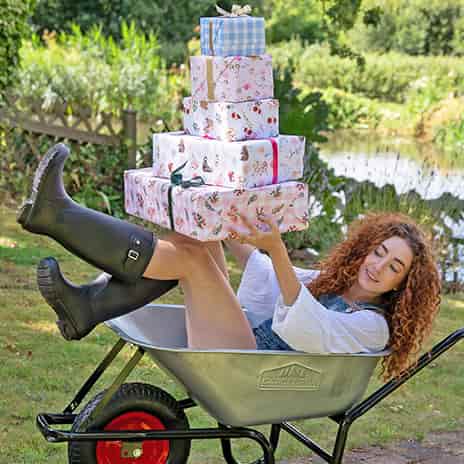
This is especially useful at Christmas, for birthdays, and for new baby gifts-any time you’re wrapping multiple presents and want them to feel cohesive. If you use artwork-led wrapping paper and a sticker seal, the notecard becomes part of the whole presentation, not an afterthought.
A card alternative that’s still useful
If you’re ever caught without a birthday card, congratulations card, or thank you card, a personalised notecard can step in beautifully. The key is how you write it. Add a slightly longer message, maybe a short memory or a specific wish, and it feels complete.
This is also a lovely approach when you want to avoid overly generic card messages. A notecard gives you freedom to say something real, in your own voice, without the pre-printed sentiment taking over.
Notes for customers (small business use)
If you run a small business, personalised notecards are one of the easiest ways to add warmth to your packaging. A short handwritten message, “Thank you so much for supporting my small business,” or “I packed this with care-hope you love it”-can make a customer feel genuinely valued.
It doesn’t need to be long. In fact, short is often better because it’s repeatable. If you’re sending lots of orders, you can keep it consistent and still make it feel personal by adding one small detail: their name, or a quick “Hope this brightens your week.”
If you’re a UK-based business printing in small batches, notecards also align nicely with a slower, more thoughtful brand vibe. They’re a simple way to reinforce that you’re not a faceless warehouse-you’re a real person making something with care.
The “open when” note (mini version)
You don’t have to create a full “Open when…” set to use the idea. Personalised notecards are perfect for mini versions: one or two notes included in a gift, labelled on the back or inside an envelope.
Examples that work beautifully:
- “Open when you’ve had a tough day,”
- “Open when you need a reminder you’re doing brilliantly,”
- “Open when you want a little cosy plan.”
Inside, write something supportive, add a recommendation (a book, a film, a café), or include a small treat like a tea bag or a chocolate coin.
The house note: calm, practical, and nicer than a scrap of paper
Personalised notecards are surprisingly useful for home life. Think: leaving a note for a partner, a reminder for a teenager, a message for a neighbour, or a quick “Back at 3pm” on the kitchen counter. It’s still just a note, but it feels calmer and more intentional than a torn piece of paper.
If you like your home to feel organised, this is a tiny habit that makes a difference. It’s also a gentle way to reduce the clutter of random sticky notes everywhere.
Personalised notecards are also brilliant for the moments that sit in-between “everyday” and “big occasion”. They’re the kind of stationery that helps you show up as the person you want to be: thoughtful, organised, warm, and a little bit put-together (even if you’re writing the note in your dressing gown with a cup of tea).
Hosting notes: the little touch people remember
If you host friends or family even occasionally, personalised notecards are your secret weapon. Use them to write a quick place note (“So happy you’re here”), a menu note (“Help yourself to pudding”), or a short message tucked under a napkin. It’s a small detail, but it makes the whole gathering feel considered.
They’re also lovely for after: a quick thank you note to someone who brought flowers, helped tidy up, or travelled to see you. These are the kinds of messages that strengthen friendships because they’re specific and real.

Notes for life moments (without the pressure of a “perfect” card)
There are lots of situations where a full greeting card feels too much, but saying nothing feels wrong. Notecards are ideal for these in-between moments:
- A friend starting a new job, moving house, or going through a breakup.
- Someone who’s had a tough week.
- A neighbour who’s been kind.
- A family member who’s caring for someone.
- A colleague who’s supported you.
A personalised notecard keeps it simple and sincere. You can write a few lines, keep it warm, and avoid the overly sentimental tone that some cards force.If you want a structure, try this: one line of acknowledgement:
(“I’ve been thinking of you”), one line of reassurance (“You don’t have to reply”), and one line of something specific (“I’m here if you want a walk / a coffee / a voice note”).
That’s it!
The “thank you for the service” note (teachers, carers, nursery staff)
Personalised notecards are perfect for end-of-term thank yous, nursery key workers, childminders, club leaders, and anyone who does the steady work of caring and showing up. They’re also ideal if you’re doing a small gift and want the message to carry the meaning.
If you’re including a gift, tuck the notecard under the ribbon so it’s the first thing they see. If you’re not including a gift, a notecard on its own can still be enough if the message is specific.
A simple prompt: mention one thing your child said, one change you noticed, or one moment you’re grateful for. Teachers and carers remember those notes because they feel real.
Work and professional use (without feeling corporate)
Personalised notecards aren’t only for personal life. They’re genuinely useful for professional moments too, especially if you work with clients, collaborate with other small businesses, or want to build relationships in a way that feels human.
Use them for:
- Following up after a meeting (“Lovely to meet you-excited about what we discussed.”)
- Thanking a client for their trust (“Thank you for choosing me-really appreciate it.”)
- Including a note with a sample or product (“Thought you’d like this—let me know what you think.”)
The key is to keep it short and confident. A personalised notecard makes it feel polished without needing a long message.
Sending happy post (the easiest way to be “that friend”)
If you love the idea of sending happy post but struggle to keep up with it, personalised notecards make it easier because you don’t need to find the “right” card each time. You can send:
- A quick hello
- A little encouragement
- A book recommendation
- A “saw this and thought of you” note
- A mini life update
A good habit is to keep a small list of people you’d like to stay connected with, then send one notecard a week. It’s low effort, but it creates a lot of warmth over time.If you want it to feel extra special, add one tiny extra: a pressed flower, a photo, a tea bag, a sticker, or a little quote you know they’ll love.
Using notecards as part of a gift set (without making it complicated)
Notecards are one of the easiest ways to make a gift feel complete. Even if the main gift is practical, like a book, a candle, or a baby item, adding a personalised notecard makes it feel personal.
A simple approach:
- Write the notecard as the “main message”.
- Wrap the gift beautifully.
- Tuck the notecard under the ribbon or inside the parcel.
If you’re gifting stationery itself, notecards are the perfect anchor item. You can build a small bundle around them: a pen, a bookmark, a roll of washi tape, a sticker seal, or a sheet of wrapping paper. It doesn’t need to be big-it just needs to feel cohesive.
The “keep it on hand” emergency card drawer
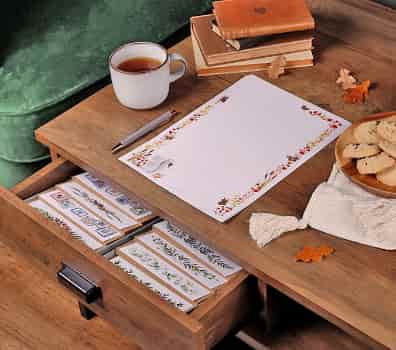
One of the most practical uses of personalised notecards is to build your own mini card drawer. Keep a small stack for the moments you always forget until the last minute: birthdays, thank yous, congratulations, sympathy, “thinking of you”.
Because the notecards are personalised, they already feel special. You don’t need a different design for every occasion. You just need a few thoughtful phrases you can adapt.
If you want to be extra organised, store them with stamps and envelopes so you can send something in five minutes.

A note to your future self (yes, really)
This one feels different, but it’s surprisingly powerful. Use personalised notecards to write short notes to yourself: encouragement for a hard season, reminders of what you’ve handled before, or a few lines about what you’re proud of.
- A first-day-of-school notecard tucked into a lunchbox.
A “good luck” notecard before exams, driving tests, or a new job. - A birthday notecard each year with a short message and one favourite memory from the year.

- A quick thank you at an event
- A note with a gift you’re handing over in person
- A message left with reception or a colleague
- A card slipped into a book you’re lending


