


Complete Wedding Stationery Checklist - What Do You Actually Need?
When wedding planning becomes overwhelming - every couple can use a complete wedding stationery checklist. You will hear that you must have certain things, that you should never do certain things, and that if you skip one detail your day will not feel complete. The truth is simpler. You only need the wedding stationery that helps your guests understand what is happening and helps you feel calm and organised on the day.
This Complete Wedding Stationery checklist is designed to be practical. It covers what most couples actually need, what is optional, and what makes the biggest difference to guest experience. It also helps you avoid ordering things you do not want just because they look good in photos.
If you are aiming for a wedding that feels thoughtful and cohesive, stationery is one of the easiest ways to create that feeling. Not because it has to be expensive or elaborate, but because matching paper goods quietly pull everything together. The invitation sets the tone. The on the day pieces guide guests. The thank you card finishes the story.
Below is the complete Complete Wedding Stationery Checklist, broken into clear sections so you can decide what to include, what to skip, and what to prioritise.

Before you start, decide what kind of wedding you are having
This is not about theme in a Pinterest sense. It is about logistics. Your stationery needs depend on how your day works.
Ask yourselves a few quick questions.
- Are you having one location or multiple locations
- Are you inviting day guests and evening guests
- Are you offering a meal choice
- Are you doing speeches before or after the meal
- Are you having a ceremony that benefits from an Order of Service
- Are you asking guests to do anything specific such as bringing confetti or taking part in a game
- Are you trying to keep things very simple or do you enjoy details
Once you know the shape of your day, the stationery becomes much easier to choose.
The Essentials: What Every Couple Needs
If you want the short answer, these are the pieces that cover almost every wedding. Everything else is either helpful or lovely, but not strictly essential.
1. Invitations
Your invitations are the anchor. They tell guests the key information and set expectations for the day. Many couples still love a printed invitation because it feels special and keepsake worthy.
At minimum, your invitation needs:
- Your names
- The date
- The ceremony start time
- The venue name and location
- A clear call to action for how to RSVP and by when
If you are inviting guests to a full day with multiple parts, you can include a simple line such as ceremony followed by drinks reception and wedding breakfast. If you are inviting evening guests only, make that clear too.

2. RSVP cards
Your Complete Wedding Stationery Checklist should include RSVP cards. They make it easier for guests to respond, and easier for you to track responses. They also reduce the back and forth messages that can quietly take over your evenings.
An RSVP card is especially useful if you need to collect:
- Meal choicesDietary requirements
- Song requests
- Whether guests are attending the full day or evening only
- Plus one names
If you are collecting responses online, you can still include an RSVP card that points guests to your wedding website or email address. It keeps the suite feeling complete while keeping admin manageable.
3. Save the Date cards
Save the Date cards are not essential for every wedding, but they become essential in certain situations.
Send Save the Date cards if:
- You are getting married in peak season
- You have lots of guests travelling
- You are getting married on a bank holiday weekend
- You are planning a destination wedding
- You want to give guests plenty of notice before invitations go out
A Save the Date does not need every detail. It needs names, date, and location area. You can add a line that formal invitation to follow.
4. Information cards
Information cards are one of the most useful pieces of wedding stationery. They stop your invitation from becoming cluttered, and they give guests the practical details they actually need.
This is where you can include:
- Timings overview
- Address and parking notes
- Transport and taxi information
- Accommodation suggestions
- Dress code guidance
- Gift information
- Wedding website details
- Any special requests such as unplugged ceremony
If you are trying to keep your invitation clean and elegant, a separate wedding information card is the best way to do it.
Think of the info card as guest care. It is not just extra paper. It is the part that prevents confusion.
If you are worried about overwhelming guests with text, keep it simple. Use short sections with headings such as Travel, Timings, Accommodation. You can also point to a wedding website for full details and use the info card for the essentials.

The Complete Wedding Stationery Checklist, organised by wedding stage
To keep this genuinely useful, here is the full list broken down into when you use each item.
Stage 1: Announcing the date
- Save the Date cards
These go out first, usually six to twelve months before the wedding. Earlier if you have lots of travel.
Stage 2: Inviting guests and collecting responses
- Invitations
- RSVP cards
- Information cards
This is your core invitation suite. It is the part that does the heavy lifting.
If you are sending invitations in envelopes, stickers are a lovely finishing touch. They also make your stationery feel more intentional without adding complexity.
Stage 3: The emotional pieces you will be glad you did
- Letter to my Wife writing paper set
- Letter to my Husband writing paper set
These are not logistical, but they are deeply meaningful. Many couples exchange letters on the morning of the wedding or the night before. It is a private moment in a day that can feel busy and public.
If you are writing a letter, do not worry about making it perfect. Write what you love, what you admire, what you are excited for, and what you promise to keep choosing. These letters often become some of the most treasured keepsakes from the whole wedding.

Stage 4: On the day guest guidance and atmosphere
This is the area where couples either do nothing or do everything. The sweet spot is choosing the pieces that genuinely help guests and enhance the experience.
Order of Service
If you are having a ceremony with readings, hymns, or a structured format, an Order of Service is genuinely helpful. It also gives guests something to hold and follow, which can make the ceremony feel more inclusive.
You may not need an Order of Service if your ceremony is very short and informal. But if you are in a church or you have multiple readings, it is worth having.
It is also worth knowing that Order of Service cards can double up as Order of the Day cards. Instead of focusing only on the ceremony, you can use them to share a simple schedule of the day so guests know what is happening and when. This is especially useful if you have a drinks reception, speeches, a wedding breakfast, and an evening party, or if you are moving between spaces and want everyone to feel confident about timings.
Confetti cones
Confetti cones are practical and photogenic. They make it easy to hand out confetti and they create a clear moment for guests. If your venue allows confetti, cones keep it tidy and simple.
If your venue has restrictions, you can still use cones for dried petals or biodegradable options if permitted.
Hanger tags for bridal party
Hanger tags are a small detail that can make getting ready photos feel more polished. They are also a thoughtful touch if you are gifting robes or outfits to your bridal party.
They are optional, but if you care about those early morning details, they are one of the easiest wins.

Table numbers
If you have a seated meal, table numbers are essential. They help guests find their place quickly and reduce the awkward wandering around.
Even if you have a seating plan, table numbers still matter because guests need to match their name to a table.
Menu cards
Menu cards add a sense of occasion. They also answer the question guests always ask, which is what are we eating.
Menu cards are especially useful if:
- You have a choice menu
- You have a lot of dietary variations
- You want to highlight local ingredients or a story behind the meal
- You want the table to feel styled and complete
Activity packs
Activity packs are brilliant if you have children at your wedding or if you want to keep guests entertained during quieter moments. They are also helpful during the meal, especially if speeches are spread out and there is a longer sit down period.
If you are having a family friendly wedding, activity packs can make a big difference to parents.
Advice cards keepsake
Advice cards are one of the easiest ways to create a keepsake that involves your guests. They give people something to do, and you end up with a collection of messages you will actually want to read later.
They work well at the reception drinks, during the meal, or near the guest book area.

Sign and Say icebreaker game
If you have guests from different parts of your life who do not know each other, an icebreaker can help. The Sign and Say icebreaker game gives people a reason to chat and laugh without forcing anything awkward.
It is especially useful for:
- Smaller weddings where conversation matters
- Mixed friendship groups
- Weddings with lots of guests travelling solo
- Couples who want a relaxed, sociable atmosphere
On the Day Stationery: What Actually Makes a Difference
If you do not want loads of stationery, focus on what improves guest flow and comfort.
These are the pieces that most often make the day run smoother:
- Order of Service if your ceremony is structured
- Table numbers if you have assigned seating
- Menu cards if guests will ask what is being served
- Confetti cones if you want a clear confetti moment
- Place cards with guests names
- Advice cards if you want guest messages without a formal guest book
- Activity packs if children are attending
- Matching coloured pens for guestbooks and other guest activities
Make it matching for bigger impact
Matching stationery is not about being perfect. It is about creating a thread that runs through the day.
When your invitation suite matches your on the day stationery, everything feels intentional. Guests notice it even if they cannot put their finger on why it feels so put together.
Matching can be as simple as:
- Using the same design across invitations, RSVP, and info cards
- Match your invitation suite with your on the day stationery
- Using matching stickers to seal envelopes
- Matching your stationery colour palette to your florals and wedding day outfits

Wrapping paper, stickers, and the finishing touches
Wrapping paper might not be the first thing you think of for weddings, but it can be surprisingly useful.
You can use wrapping paper for:
- Wrapping bridal party gifts
- Wrapping parents gifts
- Wrapping the letter sets if you are exchanging them
- Wrapping small thank you gifts for helpers
- Wrapping keepsake boxes or albums
It is also a simple way to keep your wedding aesthetic consistent across all the little moments.
Stickers are another small detail that does a lot. They can seal envelopes, label favour bags, or add a finishing touch to advice cards and activity packs. They are practical and decorative at the same time.
Thank you stationery, the part people forget
After the wedding, you will have a lot to do. Thank you notes are one of those tasks that can drag on for months if you do not make it easy.
Thank you cards and thank you postcards both work well. The choice depends on your style and how much you want to write.
Thank you cards are best if you want to write longer messages or if you want them to feel more formal.
Thank you postcards are best if you want something quick and simple that still feels personal. They are also easier to send in bulk.
A good rule is to write thank you notes in batches. Do not wait until you have the perfect time. Put on a film, make a cup of tea, and do ten at a time.
If you want to make your thank you message feel meaningful without writing an essay, include three things:
- Thank you for the specific gift or support
- One line about how you will use it or what it meant
- A personal detail from the day such as a moment you shared

A complete wedding stationery checklist
Before the wedding:
- Save the Date
- Invitations
- RSVP
- Info Cards
- Stickers
- Envelopes
Meaningful keepsakes:
- Letter to my Wife
- Letter to my Husband
On the day:
- Order of Service
- Confetti Cones
- Hanger Tags for Bridal Party
- Table Numbers
- Menu Cards
- Activity Pack
- Advice Cards Keepsake
- Sign and Say Icebreaker Game
- Matching Pens
- Place cards
After the wedding:
- Thank you Cards
- Thank you Postcards
Extras and gifting:
- Wrapping Paper
- Stickers

Final thoughts
The wedding stationery you actually need is the stationery that supports your day. Start with the essentials, then add the pieces that make a difference to your guests and to you.
If you love the idea of a cohesive wedding, matching stationery is one of the simplest ways to create it. It makes the day feel thoughtfully put together without needing more stuff.
And if you are trying to keep things calm, remember this. Guests do not notice what you did not do. They notice how they felt. Good stationery helps them feel informed, welcomed, and included. That is the goal.
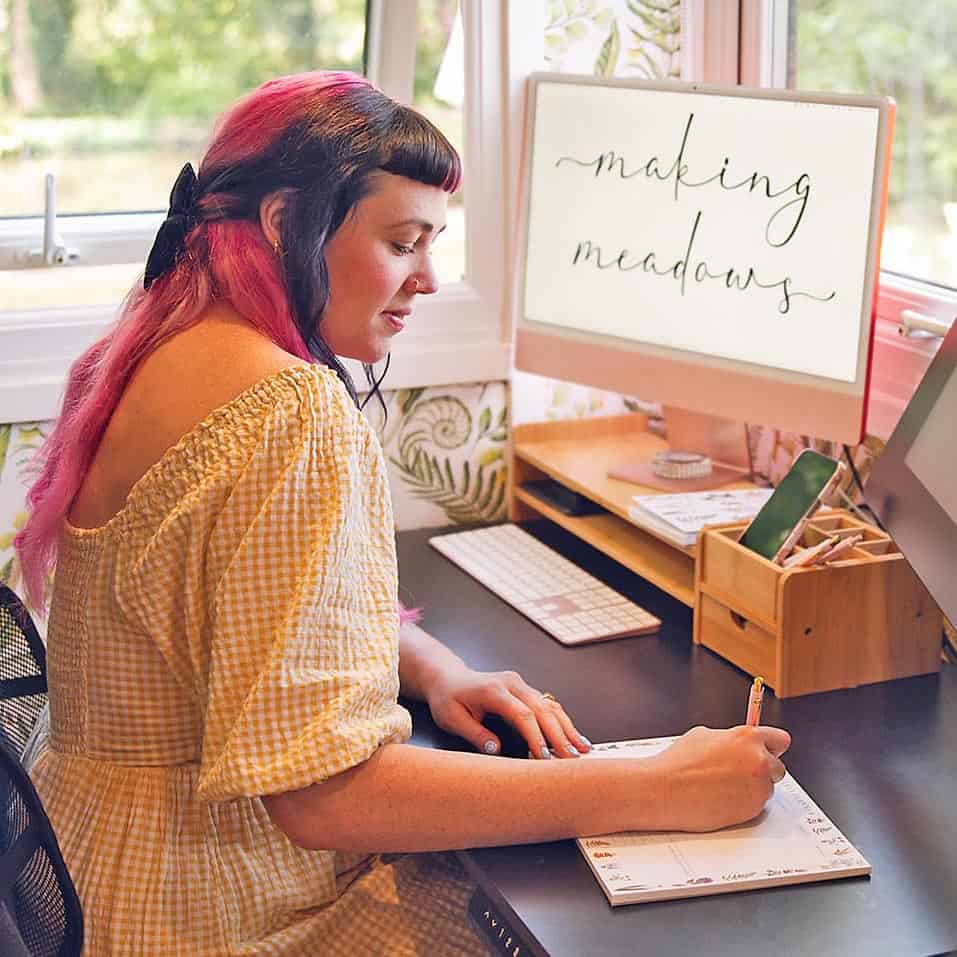
Making Meadows x

